Jealousy in Relationships: Communicate, Heal, Rebuild Trust
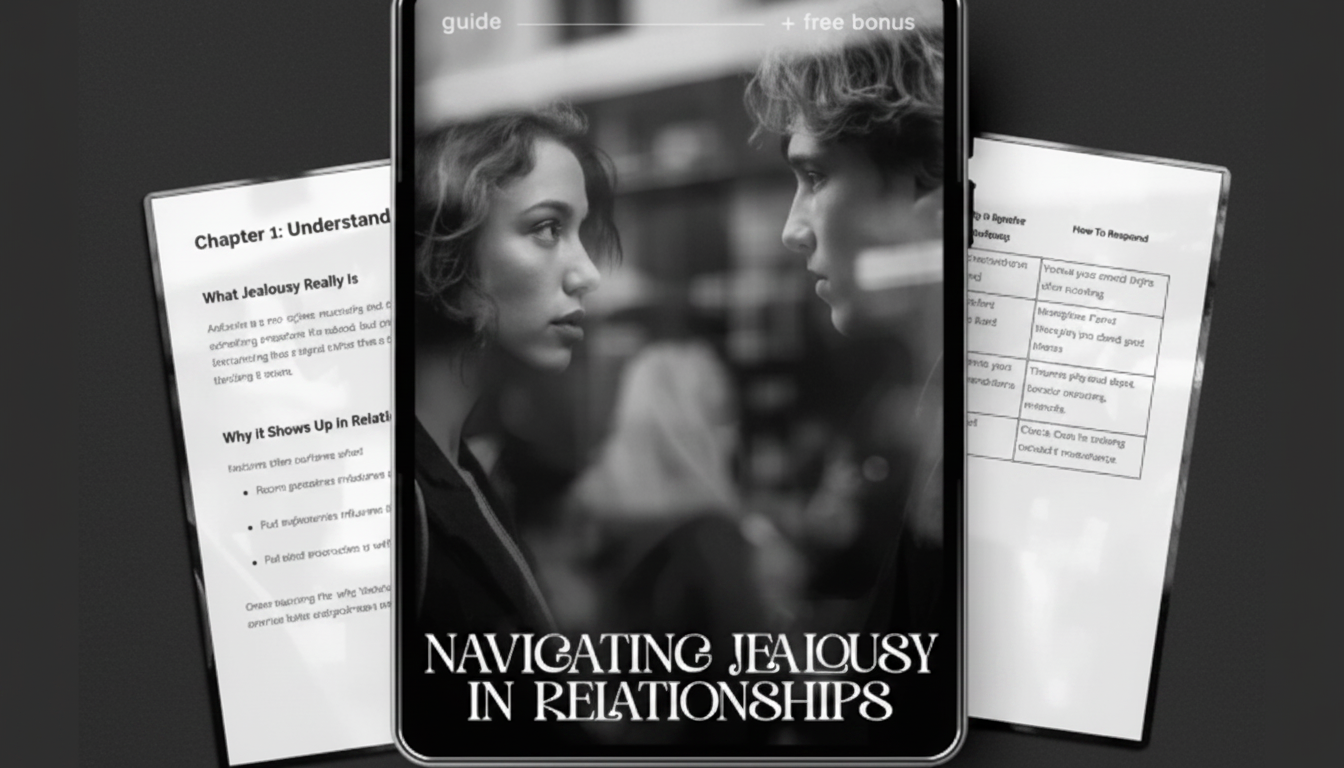
Navigating Jealousy in Relationships: Healthy Communication, Emotional Healing, and Practical Ways to Cope
Jealousy can show up as anxiety, anger, checking behaviors, or quiet resentment—and it often signals an unmet need for safety, reassurance, respect, or clarity. When it’s handled with honesty and skill, jealousy can become a doorway to stronger boundaries, better communication, and deeper trust. The goal isn’t to “never feel jealous,” but to understand what the feeling is protecting, respond without control or shame, and rebuild connection through consistent actions.
What Jealousy Is (and What It’s Not)
Jealousy and envy get lumped together, but they’re not the same. Jealousy usually involves a fear of losing a valued relationship, while envy is wanting what someone else has. Jealousy often comes with a sense of urgency because the brain can process relational threat similarly to other threats—making it easier to react impulsively.
Common signals include rumination, comparing yourself to others, irritability, reassurance-seeking, social media monitoring, withdrawing, or blaming. Sometimes jealousy points to a real issue, like broken agreements, secrecy, repeated boundary violations, or unclear commitment. The key is to respond to the facts without letting fear write the whole story. For a clear definition of the emotion itself, the American Psychological Association’s description of jealousy is a helpful reference point.
Root Causes: Triggers, Attachment, and Past Wounds
Jealousy is rarely “random.” It often has a pattern—specific moments that spike it, specific stories your mind tells, and specific outcomes you fear. A practical way to start is trigger mapping: identify who/what/where, then the meaning you assigned, then the feared consequence.
Attachment patterns can also shape jealousy. Anxious attachment often fears abandonment and may seek repeated reassurance. Avoidant attachment often fears dependence and may shut down or minimize. Secure attachment isn’t about never feeling jealous; it’s about being able to self-soothe and ask directly for clarity.
Past experiences—betrayal, inconsistent caregiving, bullying or competition, a previous partner’s secrecy—can amplify sensitivity. Self-worth factors matter too: feeling “not enough,” scarcity beliefs, or relying on the relationship as the only source of validation. And don’t ignore contextual stressors like sleep deprivation, financial pressure, postpartum changes, major transitions, or long-distance strain.
From Trigger to Healthier Response
| Jealousy trigger | What it might be protecting | Helpful response to try |
|---|---|---|
| Partner texts an ex or old friend | Need for clarity and inclusion | Ask for the context and propose a simple transparency agreement |
| Seeing flirting at a party | Need for respect and reassurance | Use a brief signal/phrase to reconnect; discuss boundaries after the event |
| Social media likes/comments | Need for security and reduced comparison | Limit scrolling; request a check-in ritual; focus on shared values |
| Partner becomes private with their phone | Need for trust and consistency | Describe observed behavior calmly; request a mutual plan for privacy vs. secrecy |
| Partner spends time with a coworker | Need for stability and priority | Schedule protected couple time; clarify what “priority” looks like in daily routines |
How to Respond in the Moment Without Escalating
When jealousy hits, the first goal is to reduce the “alarm.” Try a 60–90 second pause with slow breathing: inhale gently, exhale longer than you inhale, and let your shoulders drop. This interrupts the surge that leads to checking, interrogating, or sarcastic comments.
Finally, choose a non-controlling action. Step away from monitoring behavior (DMs, phone scans, surprise “tests,” rapid-fire questions) and return to regulation. A quick grounding script can help: “I feel threatened; I don’t need to fix this instantly; I can ask clearly when calm.” If rumination or anxiety becomes persistent and disruptive, consider support options like talking therapies; the NHS overview of talking therapies offers a practical starting point.
Healthy Communication That Builds Trust (Instead of Power Struggles)
Agree on boundaries versus rules. Boundaries protect personal well-being (“If we’re at a party and I feel disconnected, I’ll ask for a quick check-in”). Rules attempt to manage the other person (“You can’t talk to anyone attractive”). After conflict, repair matters: acknowledge impact, apologize for the method (not necessarily the feeling), and choose one concrete change for next time. Relationship research on trust and repair is a major focus at The Gottman Institute.
Tools that make calm talks easier
If you want structured support for these conversations, Navigating Jealousy in Relationships – Digital Guide on Healthy Communication, Emotional Healing & Ways to Deal with Jealousy in Relationships breaks the cycle into practical steps you can apply without turning every moment into a debate. For everyday communication practice that reduces misunderstandings before they snowball, Small Talk Made Simple | Digital Download Guide for Better Conversations, Easy Social Skills, Everyday Communication Tips, Printable eBook helps build smoother, lower-stress connection. And if jealousy flares when you’re depleted, Your AI-Powered Daily Boost Checklist | Digital Energy Tracker, Productivity Planner, AI Wellness Tool, Daily Routine Optimizer Printable & Guide supports simple routines that improve emotional resilience.
Emotional Healing: Rebuilding Security From the Inside Out
When Jealousy Signals a Bigger Problem
A Simple Practice Plan for the Next 14 Days
FAQ
Is jealousy normal in a healthy relationship?
Yes—jealousy is a common emotion, but healthy relationships treat it as a signal to explore needs and boundaries, not a reason to control or surveil. The feeling can be valid while certain reactions (monitoring, accusations, threats) are not.
How can jealousy be communicated without sounding accusatory?
Use a simple script: “I felt anxious when I noticed ___; I’m needing ___; can we ___?” Choose a calm time, stay specific about what you observed, and aim for curiosity and collaboration instead of cross-examination.
When does jealousy become a sign of a toxic dynamic?
It becomes toxic when it turns into control (monitoring, isolation, coercion, threats) or when repeated boundary violations and fear-based communication replace mutual respect. If you feel unsafe or trapped in escalating cycles, professional support and safety resources are appropriate.











Leave a comment