Gentle Habit System: Small Daily Changes That Stick
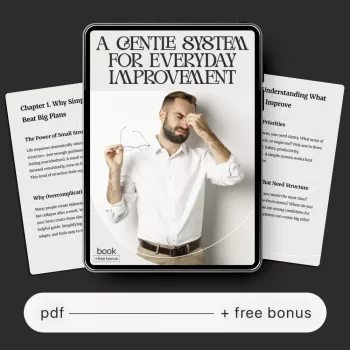
A Gentle System for Everyday Improvement: Simple Habits That Actually Stick
Big life changes rarely happen through big bursts of motivation. Sustainable progress comes from a calm, repeatable approach that fits into real days—busy schedules, low-energy evenings, and unpredictable weeks included. A gentle improvement system keeps the bar low enough to clear consistently, then lets momentum build naturally. Instead of waiting to “feel ready,” it helps daily actions become automatic, so growth continues even when life gets full.
What “gentle improvement” looks like in real life
Gentle improvement is less about dramatic resets and more about quiet repetition. It prioritizes consistency over intensity: small actions done often create more change than occasional overhauls. Over time, those repetitions build identity—habits reinforce the kind of person being practiced, not just a task list.
Compassion also matters as a strategy. Missed days are treated as data, not failure, which keeps you from spiraling into “I blew it” thinking. The system stays workable by keeping friction low: the easiest version of a habit becomes the default, especially on hard days. And rather than leaning on willpower, it focuses on systems—routines, cues, and environments that make the next best action easier.
Gentle habits vs. all-or-nothing goals
| Approach | Typical plan | What happens when life gets busy | Better gentle alternative |
|---|---|---|---|
| All-or-nothing goal | 30 minutes daily, no exceptions | Missed days lead to quitting | 5-minute minimum version that keeps the streak alive |
| Motivation-driven | Start big when inspired | Momentum fades quickly | Tiny baseline plus a simple weekly review |
| Perfection-focused | Track everything, optimize constantly | Tracking fatigue and guilt | Track one signal that matters (e.g., days practiced) |
| Outcome-only | Chase a dramatic result | Progress feels invisible early on | Measure inputs and celebrate repetitions |
Start with one “everyday anchor”
Anchors are stable moments that already happen most days. Think: after brushing your teeth, before coffee, after lunch, or when shutting down work. The goal is to attach a micro-habit to that anchor so the habit borrows the anchor’s consistency.
Design habits that are easy to start and satisfying to finish
Once the baseline feels automatic for 2–3 weeks, add a gentle progression—more time, more reps, or a slightly more challenging version. This timing matters: habit research suggests automaticity builds gradually and varies by behavior complexity and consistency (see Lally et al. on habit formation).
If movement is part of the plan, keep it simple and supportive of your current capacity. Even modest physical activity has meaningful benefits for health and mood over time (reference: CDC guidance on physical activity benefits).
Keep the system consistent with a weekly rhythm
A simple weekly review template
| Prompt | Example answer | Next small adjustment |
|---|---|---|
| What felt easy? | Drank water after brushing teeth | Keep the same cue |
| What felt hard? | Evening walk after dinner | Switch to lunchtime walk |
| Where did friction show up? | Shoes were in the closet | Place shoes by the door |
| What is one small win? | 3 days of reading | Set a 5-minute timer to start |
| What is the one focus for next week? | Earlier bedtime | Phone stays outside the bedroom |
Handling setbacks without losing momentum
If stress is the main barrier, choose calming actions that are easy to start—one slow breath cycle, a two-minute stretch, or a short walk. Practical stress-management guidance from an authoritative source can help when designing gentle coping routines (see APA resources on stress).
A ready-to-use guide for building a calm, repeatable system
For a structured, step-by-step approach, A Gentle System for Everyday Improvement (ebook) is designed to help build simple routines and consistent habits without pressure. It’s especially useful for anyone who cycles between starting strong and stopping—by emphasizing small wins, stable cues, and a sustainable pace.
For day-to-day support, Your AI-Powered Daily Boost Checklist can reduce mental overhead by turning intentions into a short, repeatable sequence—helpful on “red-light” days when motivation is low. A practical next step is choosing one anchor habit and committing to the minimum version for two weeks before expanding.
Simple add-ons that support consistency
- Daily checklist: Reduces mental load by removing repeated decisions and keeping the baseline visible.
- Energy-aware routines: Match habit intensity to the day’s capacity, rather than forcing the same output daily.
- Communication reps: Relationships improve with small daily actions—one message, one compliment, or one conversation starter. If that area feels sticky, Small Talk Made Simple offers simple prompts and practical social skills to make “one small rep” feel doable.
- Family routines: Shared schedules reduce friction and repeated conflicts. For families who want a clearer flow, Using AI to Organize Your Child’s Day with Ease can help simplify planning and make routines easier to follow.
FAQ
How long does it take for a habit to feel automatic?
It varies widely depending on the habit’s complexity, how often you do it, and how consistent your cue is. Aim for a small baseline you can repeat most days and track repetitions; automaticity tends to build gradually over weeks, not overnight.
What if motivation is low most days?
Use a minimum viable habit plus a low-energy “red-light” version so you can still show up. Anchors, environment setup, and a quick weekly review work better long-term than relying on willpower.
How many habits should be built at once?
Start with one anchor habit and keep it tiny until it feels stable for a couple of weeks. Adding too many changes at once increases friction and makes it more likely you’ll drop everything when life gets busy.











Leave a comment