AI-Personalized Home Workout Plans: Weekly Routine + Checklist
Personalized Home Workouts With AI Assistance: Exercise Ideas, Weekly Plans, and a Simple Checklist
A practical way to stay consistent at home is to combine a clear workout framework with AI assistance that adapts sessions to goals, space, time, and equipment. This guide breaks down a simple process to generate customized exercise ideas, shape them into balanced weekly plans, and track progress with an easy checklist—without guesswork.
Why personalization matters for home fitness
Home workouts fail most often for predictable reasons: too many choices, plans that don’t fit real-life constraints, and progress that stalls. Personalization fixes those problems by making the next session obvious and doable.
- Reduces friction: shorter decision time makes it easier to start a session.
- Improves fit: adapts to available space, noise limits, injuries, and equipment.
- Supports progression: gradually increases volume, intensity, or complexity to avoid plateaus.
- Keeps variety with structure: swaps movements while keeping the same training goal (squat pattern, hinge pattern, push, pull, carry, core).
For general health targets, it also helps to align your weekly mix of strength and cardio with public health recommendations such as the CDC physical activity basics and the World Health Organization physical activity guidance.
What’s included in the eBook and workout guide
Structure matters more than novelty. A simple, repeatable system makes it easier to stay consistent, then adjust when life changes (travel, stress, busy weeks, limited sleep).
- A step-by-step method for generating tailored exercise ideas for different goals (strength, fat loss, mobility, conditioning).
- Templates for turning raw exercise lists into complete sessions (warm-up, main work, finisher, cool-down).
- A printable-style workout checklist to track sessions, effort, and recovery signals.
- Guidelines for adjusting difficulty using time, reps, tempo, rest, and range of motion.
If you want the templates and a ready-to-use checklist, the fastest starting point is Using AI Prompts to Generate Personalized Exercise Ideas – Home Fitness eBook, Workout Guide, AI Workout Checklist.
Checklist elements to track each session
| Checklist item | What it helps with |
|---|---|
| Session type (strength/conditioning/mobility) | Maintains balance across the week |
| Time cap and rest intervals | Controls intensity without complex math |
| Effort rating (easy/moderate/hard) | Prevents doing every session at maximum effort |
| Notes (pain, tightness, sleep) | Connects performance with recovery and safety |
A simple AI-assisted workflow (without getting overwhelmed)
The goal is consistency, not perfection. Use a short input list, request a clear session blueprint, then reuse it for a few weeks while you progress one variable at a time.
Inputs that create better workout outputs
| Input to provide | Examples |
|---|---|
| Goal | General fitness, strength, muscle building, mobility, cardio base |
| Constraints | 20 minutes, apartment-friendly, no jumping, quiet |
| Equipment | None, dumbbells, bands, pull-up bar, kettlebell |
| Limitations | Sensitive knees, low back history, wrist discomfort |
| Preferences | Circuits, minimal transitions, yoga-inspired mobility |
Build a balanced session: the 4-part structure
Common movement patterns and easy home options
| Pattern | No-equipment options | Equipment options |
|---|---|---|
| Squat | Sit-to-stand, split squat to chair | Goblet squat, banded squat |
| Hinge | Hip hinge drill, glute bridge | RDL, kettlebell deadlift |
| Push | Incline push-up, wall push-up | Dumbbell floor press, band press |
| Pull | Towel row (anchored safely), prone Y-T-W | Band row, dumbbell row |
| Core/carry | Dead bug, side plank | Suitcase carry, Pallof press |
Example weekly schedule you can adapt
Sample 4-day split (adjust time and equipment)
| Day | Focus | Session outline |
|---|---|---|
| Mon | Upper strength | Push + pull pairs, core, short cool-down |
| Tue | Lower strength | Squat/hinge focus, calves/ankles mobility |
| Thu | Upper conditioning | Low-impact intervals, shoulders/upper back mobility |
| Fri | Lower + core | Unilateral leg work, carries, breathing cool-down |
Safety and progression: keep it effective and joint-friendly
Progress isn’t only about going harder—it’s about repeating good reps long enough to own them. For resistance training fundamentals, practical guidelines like the ACSM resistance training recommendations can help frame your approach.
Turn results into a repeatable checklist
| Field | Example entry |
|---|---|
| Completed? | Yes/No |
| Effort | Moderate |
| Win | Added 2 reps to push-ups |
| Next tweak | Shorten rest by 10 seconds |
For a plug-and-play version, Using AI Prompts to Generate Personalized Exercise Ideas – Home Fitness eBook, Workout Guide, AI Workout Checklist bundles the planning method with a clean checklist you can reuse week after week.
Who this works best for
Optional gear add-ons for a smoother home routine
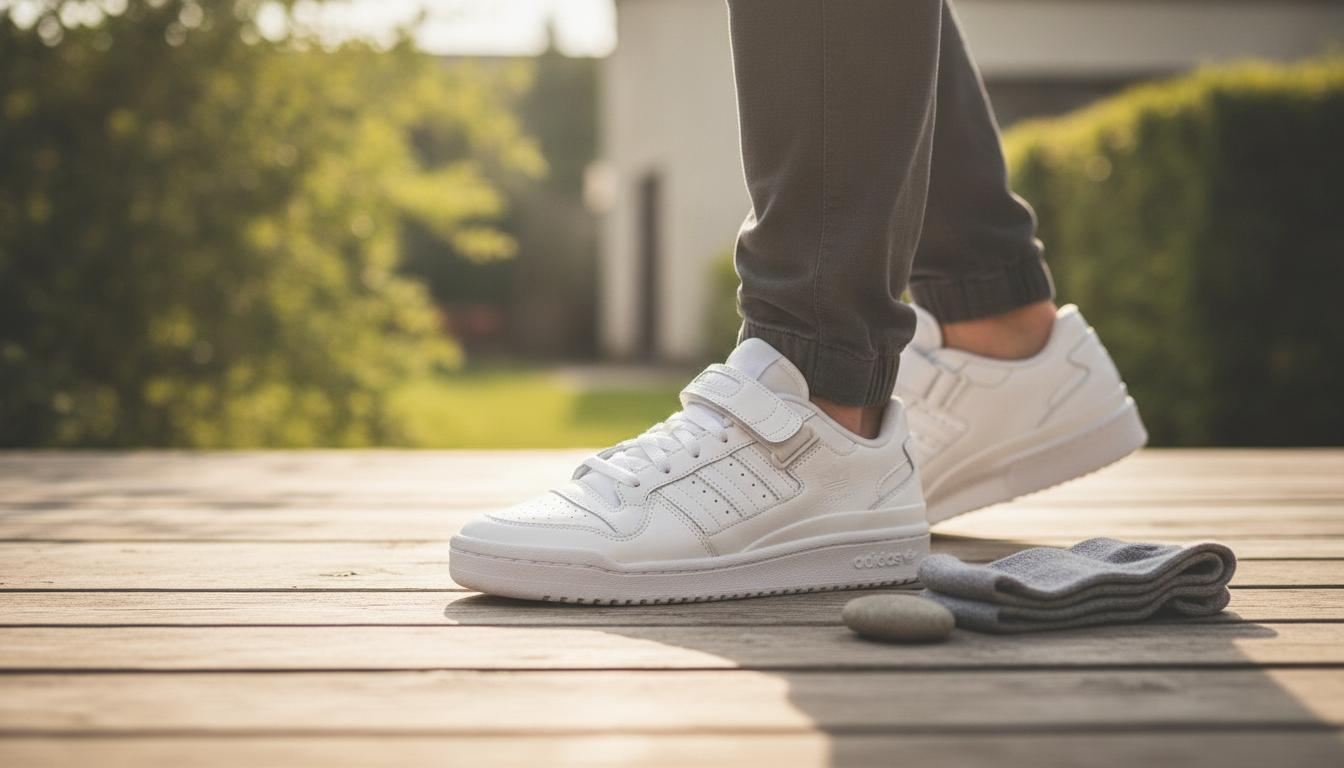
- Vans Women’s Black Leather Shoes for stable footing during squats, hinges, and carries.
- Portable Wooden Butterfly Chair as a sturdy option for sit-to-stands, split squats to a target, or seated mobility work.
- 2-Pack Inflatable Bumper Balls 4FT for playful low-stress movement days that still get you active.
FAQ
Do I need equipment to get good results at home?
No—bodyweight training can build strength and conditioning by using slower tempo, unilateral work (split squats, single-leg RDL patterns), longer sets, and shorter rest. Bands or dumbbells simply make progression more straightforward when you’re ready to add load.
How often should workouts change to avoid plateaus?
Keep the same core movements for 2–4 weeks while you progress reps, sets, rest, or tempo. After that, rotate variations (while keeping the same movement patterns) so your plan stays familiar but continues to challenge you.
Is AI assistance safe to use for exercise planning?
It can be, as long as you treat outputs as suggestions, keep effort conservative, and prioritize technique and pain-free range of motion. If you have a medical condition or persistent pain, it’s safer to get individualized guidance from a qualified professional.










Leave a comment