AI Daily Fitness Challenge Checklist for Custom Workouts
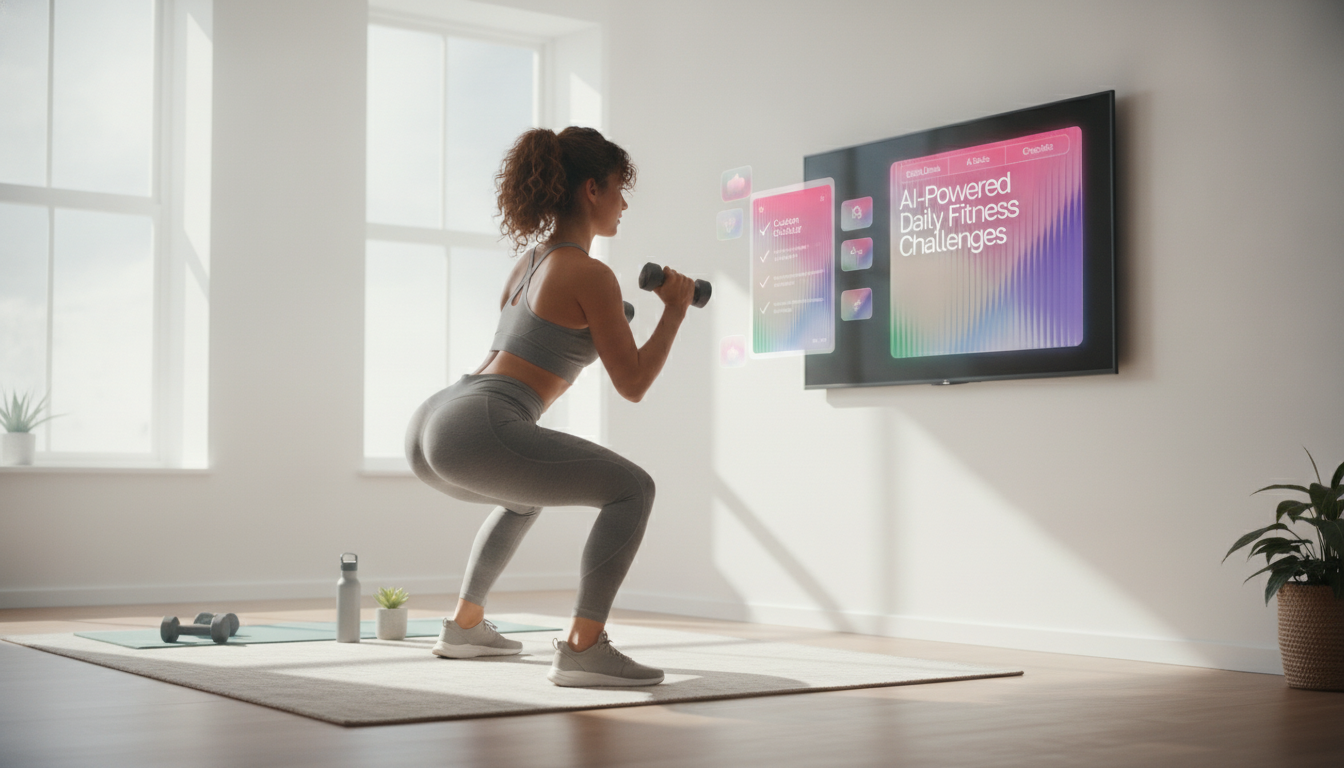
AI-Powered Daily Fitness Challenges: A Simple Checklist System for Custom Workouts
Daily movement gets easier to stick with when the plan is small, clear, and adjustable. A digital checklist built around AI-driven challenge ideas and customizable workout structures can help build consistency—whether the goal is strength, mobility, cardio, or a balanced mix—without turning training into a complicated project. Instead of searching for the “perfect” routine, you follow a simple flow: pick a focus, set a time cap, choose a format, and check off a warm-up, main set, and cool-down.
Health organizations consistently emphasize that regular physical activity supports overall health and long-term wellness. If you want a quick reference for general guidelines, see the CDC physical activity basics and the WHO physical activity fact sheet.
What This Digital Checklist Helps With
- Turns “what should I do today?” into a quick, doable challenge with a clear finish line
- Supports custom workouts by swapping exercises, time, reps, and intensity to match the day
- Encourages consistency with check-off progress and simple daily structure
- Works for home, gym, outdoors, or travel—no single setup required
- Fits different goals: fat loss, strength, conditioning, mobility, posture, or general wellness
When the structure stays the same and the details flex, it’s easier to show up. The checklist becomes a “default plan” you can run even on busy days—without losing the ability to challenge yourself when energy is high.
How the Daily Challenge Flow Works
- Pick a focus for the day (example: lower body, core, cardio bursts, recovery mobility).
- Choose a time cap (5, 10, 20, or 30 minutes) to keep the session realistic.
- Select a format that matches energy levels: circuit, intervals, EMOM-style, or “ladder” progression.
- Use the challenge suggestions to generate a workout, then adjust for equipment and joints.
- Complete the checklist: warm-up, main set, cool-down, and a short note on effort.
The time cap is the secret weapon. Instead of asking, “How long should I work out?” you decide first, then build a session that fits—so consistency doesn’t depend on motivation.
Challenge Formats That Stay Interesting (Without Feeling Random)
- Micro-challenges (5–8 minutes): ideal for busy days and building a streak.
- Skill-of-the-day: one movement pattern repeated with gradual progression (squat, hinge, push, pull, carry).
- Density blocks: aim for quality reps within a fixed time while keeping form strict.
- Low-impact conditioning: step-ups, brisk incline walking, cycling, or shadow boxing intervals.
- Mobility + core combos: short flows that improve comfort and control rather than chasing exhaustion.
Rotating formats prevents boredom while keeping your routine predictable. The goal isn’t novelty for novelty’s sake—it’s enough variety to stay engaged while still practicing the basics that drive progress.
Sample Week: Mix-and-Match Daily Challenges
Use this as a template and swap exercises based on equipment and experience. Keep 1–2 “lighter” days to reduce burnout and help recovery. Progress by adding a round, adding a minute, or improving form—not only by increasing reps.
| Day | Focus | Challenge Idea | Time Cap | Checklist Finish |
|---|---|---|---|---|
| Mon | Full body | 3 rounds: squat pattern + push + carry | 20 min | Warm-up + 3 rounds + 3-min cool-down |
| Tue | Mobility | 10-move flow: hips/ankles/thoracic + easy core | 15 min | Move through full range without pain |
| Wed | Conditioning | Intervals: 30 sec work / 30 sec easy (low impact) | 12–20 min | Steady breathing, controlled pace |
| Thu | Upper body + core | Ladder: push + pull + plank variations | 15–25 min | Stop 1–2 reps before form breaks |
| Fri | Lower body | Glute/hinge focus + short finisher walk | 20 min | Strong posture, no sharp discomfort |
| Sat | Outdoor | Brisk walk + 5 mini-sets of bodyweight moves | 30 min | Steps logged + mini-sets checked |
| Sun | Recovery | Gentle mobility + breathing reset | 10–15 min | Feel looser than when started |
How to Customize for Fitness Level, Equipment, and Joint Comfort
- Beginner-friendly swaps: reduce range of motion, slow down tempo, use support (chair, wall), shorten intervals.
- Intermediate upgrades: add a round, add a set, tighten rest, or increase time-under-tension.
- Equipment options: bodyweight, resistance bands, dumbbells, kettlebells, machines—choose what’s available.
- Joint-friendly modifications: prioritize pain-free range, choose low-impact cardio, and scale plyometrics carefully.
- Use an effort scale: most days should feel moderate; save all-out sessions for occasional tests.
A helpful checkpoint: if a movement causes sharp pain, pinching, or lingering discomfort, swap it immediately (example: switch jumping to step-ups, deep squats to box squats, or full push-ups to incline push-ups). Consistency comes from repeatable sessions, not from pushing through warning signs.
Keeping Consistency: Streaks, Recovery, and Realistic Progress
If you want a more structured reference for activity recommendations, the ACSM physical activity guidelines are a solid starting point.
What’s Included and Who It Fits Best
Recommended Digital Checklists
- AI-Powered Daily Fitness Challenges | Digital Checklist for Custom Workouts | AI Prompts for Daily Fitness Challenges ($2.99)
- Your AI-Powered Daily Boost Checklist | Digital Energy Tracker, Productivity Planner, AI Wellness Tool, Daily Routine Optimizer Printable & Guide ($5.99)
FAQ
Is this suitable for beginners with no equipment?
Yes. A bodyweight-only setup works well—start with short time caps, simple movement patterns (squat to a chair, wall push-ups, marching, dead bugs), and low-impact conditioning, then build up gradually as your comfort and stamina improve.
How long should a daily challenge workout be?
Most people do best with 5–30 minutes, depending on schedule and recovery. Choose a time cap you can repeat most days; consistency matters more than occasionally doing a long session.
Can the checklist be used for weight loss and strength goals?
Yes. Strength improves by progressing tension and volume over time (harder variations, added resistance, more rounds, or tighter rest), while weight management is supported by regular activity paired with nutrition basics like adequate protein and an overall calorie approach that fits your goal.










Leave a comment