Cat Body Language Cheat Sheet: Tails, Ears, Meows
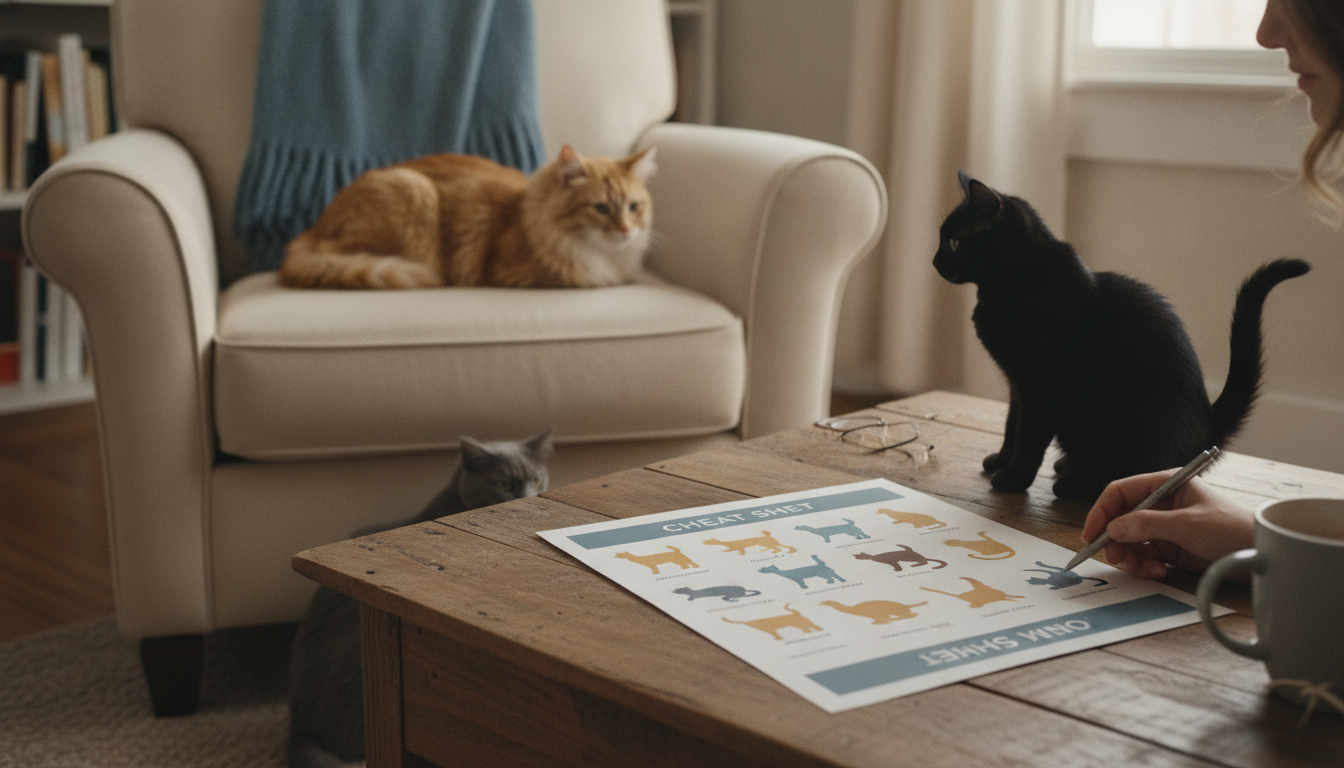
Cat Body Language and Behavior: A Practical Cheat Sheet for Signals, Postures, and Meows
Cats communicate constantly—often quietly—through posture, tail position, ear direction, eye shape, vocal patterns, and small changes in routine. Reading these signals as a whole (not as isolated “one-off” gestures) helps prevent bites and scratches, reduces stress, and makes daily care like handling, play, and introductions smoother. Use the guide below to spot common patterns, understand what they usually mean, and choose a safe, respectful response.
How to read cat signals: context, clusters, and change over time
The most reliable way to “decode” a cat is to watch patterns instead of single gestures. A tail flick alone can mean several things, but a tail flick plus ears turning back plus a stiff body is much clearer.
- Look for a cluster of signals: ears + tail + eyes + overall posture + movement.
- Factor in context: time of day, recent handling, guests, other pets, loud sounds, or a shifted routine.
- Notice distance cues: hissing, swatting, and stiffening usually increase distance; slow blinking, soft posture, and approaching usually decrease distance.
- Compare to baseline: sudden changes in sociability, grooming, appetite, litter box habits, or vocalization can point to stress or pain and deserve attention.
For deeper behavior and health context, reputable references include the Cornell Feline Health Center and American Association of Feline Practitioners (AAFP).
Body posture: confident, cautious, fearful, and defensive
Posture is the “big picture” signal. It shows how safe (or threatened) a cat feels and how likely they are to accept touch or interaction.
- Relaxed/comfortable: body loose, weight evenly distributed, may flop to one side; often paired with soft facial muscles.
- Cautious/uncertain: body lowered, muscles slightly tense, pausing frequently; may “freeze” to assess before moving.
- Fearful: crouched low, trying to appear smaller; may retreat, hide, or keep a clear escape route.
- Defensive (high arousal): stiff posture, fur standing up, body angled to protect vital areas; may hiss or swat if approached.
- Playful: bouncy movement, quick sprints, “butt wiggle” before pouncing; claws may be partially out during high-energy play.
Common posture patterns and what to do next
| Posture | What it often signals | Safer response |
|---|---|---|
| Loose, sprawled, belly exposed | Comfort or trust (not always an invitation to touch) | Offer gentle cheek/head rubs; avoid belly contact unless the cat clearly enjoys it |
| Crouched low with weight back | Uncertainty or fear | Give space; speak softly; allow escape route; avoid reaching over the head |
| Sideways stance with arched back | Defensive display; trying to look bigger | Stop approach; reduce stimuli; let the cat choose distance |
| Still “freeze” posture | High vigilance; can precede a swat or bolt | Pause interaction; allow the cat to move away; redirect with a tossed treat |
| Bouncy, springy movement | Play readiness | Use a wand toy; keep hands/feet out of play to prevent biting habits |
Tail language: not just “happy” or “mad”
Think of the tail as an “arousal meter” that can reflect excitement, focus, irritation, or fear. The same tail action can mean different things depending on the rest of the body.
- Tail up like a question mark: friendly greeting and openness, especially when approaching trusted people.
- Tail low or tucked: stress or fear; check for crouching and ears turning sideways/back.
- Tail flicking or lashing: rising irritation or overstimulation; often a clear “stop what you’re doing” during petting.
- Puffed tail: fear or high arousal; create space and lower the intensity of the environment.
- Tip twitching: focused attention (toy/prey watching) or mild agitation; confirm with eyes, ears, and muscle tension.
Ears, eyes, and whiskers: the fast “mood meter”
If posture is the big picture, the face is the rapid status update. Small changes can happen in seconds, especially during petting and play.
- Ears forward: engaged/curious; often paired with normal pupils and a loose body.
- Ears sideways (“airplane ears”): uncertainty or discomfort; slow down and give the cat more control of distance.
- Ears pinned back: fear or anger; bite/scratch risk increases if pressured.
- Slow blink: affiliative signal; returning a slow blink can communicate calm and safety.
- Dilated pupils: excitement, fear, or play arousal; consider overall lighting and body tension.
- Whiskers forward: interest (food, play, investigating). Whiskers pulled back: stress or defensiveness.
Vocalizations: meows, purrs, chirps, and growls
For common behavior concerns and humane management options, the ASPCA cat behavior resources are a helpful starting point.
Touch tolerance: petting, overstimulation, and consent checks
Stress, conflict, and when behavior may signal a health issue
Printable quick-reference option for daily use
Quick pick: Printable Cat Body Language & Behavior Cheat Sheet
Also available: Cat Body Language & Behavior Cheat Sheet | Printable Cat Communication Guide | Learn Feline Signals, Postures & Meows
For tracking routines and patterns (feeding times, play sessions, triggers), a simple daily log can help: Your AI-Powered Daily Boost Checklist | Digital Energy Tracker, Productivity Planner, AI Wellness Tool, Daily Routine Optimizer Printable & Guide
For households practicing calmer, clearer interaction habits overall, a communication refresher can be useful: Small Talk Made Simple | Digital Download Guide for Better Conversations, Easy Social Skills, Everyday Communication Tips, Printable eBook
FAQ
Does a cat showing its belly mean it wants a belly rub?
Not necessarily. A belly display often signals comfort and trust, but many cats will still protect that vulnerable area if touched. Offer cheek or head rubs first, and use a brief pause “consent test” before attempting new touch areas.
Why does my cat purr while acting tense or hiding?
Purring can happen during stress, discomfort, or pain as well as relaxation. Check for other signs like a tight body, tucked posture, reduced appetite, or litter box changes. If the tense/hiding behavior is new or persistent, a veterinary check is a smart next step.
What does tail flicking mean during petting?
Tail flicking during petting commonly indicates rising arousal or overstimulation and is often a request to stop or slow down. Pause for a few seconds, switch to shorter sessions, and focus on preferred zones like cheeks and the base of the ears.












Leave a comment