Social Confidence: A Step-by-Step Digital Practice Guide
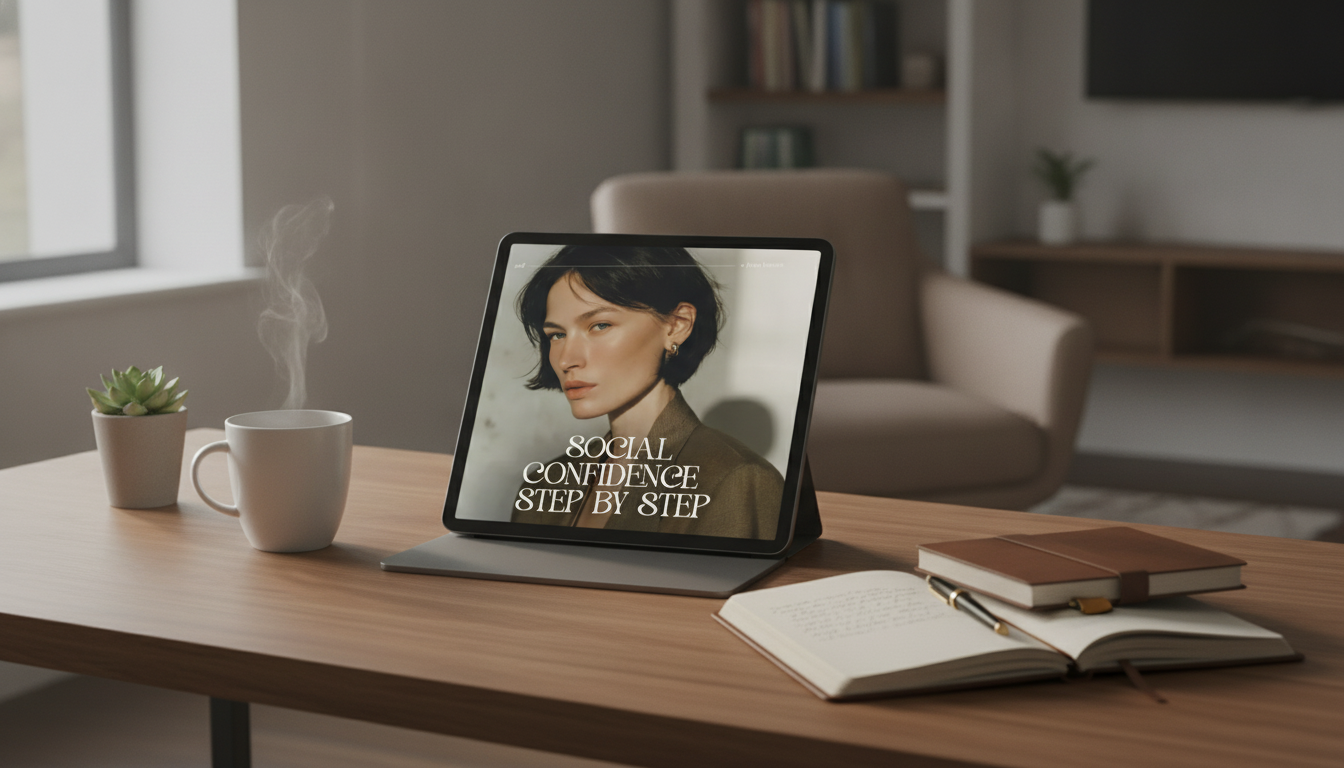
Social Confidence, Step by Step: A Practical Digital Guide to Stronger Social Skills
Feeling awkward, overthinking conversations, or avoiding social situations can be changed with small, repeatable actions. Social confidence isn’t a trait you either “have” or “don’t”—it’s a skill set that gets stronger with practice, realistic goals, and a simple way to review what worked. This practical, step-by-step digital guide is built for real life: quick greetings, calmer body language, easier small talk, and speaking up without spiraling into self-criticism.
What Social Confidence Really Is (and What It Isn’t)
Social confidence is the ability to stay present and engaged even when nerves show up. It’s not a flawless performance, and it doesn’t require a loud personality or constant charisma.
- Confidence grows from skills and repetition, not from being “naturally outgoing.”
- Anxiety and confidence can coexist. The goal is participation, not the total absence of fear.
- A helpful target is “comfortable enough to act,” rather than “completely relaxed.”
If anxiety feels intense or persistent, it may help to learn how social anxiety works and what support options exist. Authoritative overviews are available from the National Institute of Mental Health and the American Psychological Association.
The Step-by-Step Framework: Skills That Stack
Confidence builds faster when practice moves from low-stakes to high-stakes on purpose. Think of it like strength training: lighter reps first, then gradually more load.
- Low-stakes reps: brief greetings, short questions, and quick positive interactions.
- Medium-stakes reps: joining a group chat, offering an opinion, initiating a short conversation.
- High-stakes reps: networking, meeting new groups, or addressing conflict calmly.
- After each attempt, use a feedback loop: what went well, what felt hard, one adjustment for next time.
Weekly Social Confidence Ladder (Example)
| Step | Practice goal | Time needed | What to track |
|---|---|---|---|
| 1 | Say hello + eye contact to 3 people | 5–10 min/day | Did it happen? (Y/N) |
| 2 | Ask one open-ended question | 5–10 min/day | How long the exchange lasted |
| 3 | Share a small personal detail | 10–15 min, 3x/week | Nerves before vs. after (1–10) |
| 4 | Initiate a short plan (coffee/walk/call) | 15 min, 1–2x/week | Follow-through rate |
| 5 | Speak up in a group once | 10–30 min, 1x/week | What helped you do it |
Conversation Skills That Make Socializing Easier
Conversation doesn’t have to be clever to be good. Simple structure lowers pressure and keeps things moving, even if you feel nervous.
- Use openers that fit the setting: observation + question (“That place looks busy—have you been here before?”).
- Lean on follow-up questions: who/what/how/why questions create flow without trying to “perform.”
- Try “echo + add” responses: reflect a key word (“A new job?”) then add a related question or thought.
- Exit gracefully: “Good talking with you—I’m going to grab a drink, catch you later.”
For a tighter, conversation-first approach, pair this routine with Small Talk Made Simple (digital download)—especially if starting is the hardest part.
Body Language and Voice: Small Adjustments, Big Impact
People often read “confidence” through pace, posture, and ease—not perfection. Small changes can shift how you feel and how you’re perceived.
- Neutral-friendly baseline: relaxed shoulders, uncrossed arms when possible, steady breathing.
- Soft eye contact: brief contact, look away naturally, return—no staring contest required.
- Slow down slightly: a calmer pace often reads as confidence even when you’re nervous.
- Grounded stance: stable feet, balanced weight; it reduces fidgeting and steadies your voice.
Managing Overthinking and Social Anxiety in the Moment
Overthinking tends to pull attention inward. The fastest way out is to name the pattern, then give your brain a simple job to do.
If your fear leads to ongoing avoidance or significant distress, additional support can help. The NHS overview of social anxiety explains symptoms and common treatment approaches in a clear, practical way.
Building a Daily Practice Without Burning Out
To keep momentum without decision fatigue, a lightweight tracker can help you show up on autopilot. Your AI-Powered Daily Boost Checklist (digital download) works well alongside social practice because it makes “did I do the rep?” quick to capture.
Digital Download Guide: What You Get and Who It’s For
Social Confidence, Step by Step (digital download) is designed for real-world situations: work conversations, friendships, dating, networking, and everyday interactions where nerves like to show up. It’s useful if you’re starting from scratch and also if you’ve improved before but want structure that keeps you consistent.
Quick Details
| Format | Delivery | Best for | Price |
|---|---|---|---|
| Digital download eBook | Instant access after purchase | Social skills practice + personal growth routines | USD 3.99 |
Pairing Guides for Faster Progress
- For conversation flow: pair the confidence ladder with Small Talk Made Simple (digital download) so you never feel “out of things to say.”
- For consistency: use Your AI-Powered Daily Boost Checklist (digital download) to track reps and reduce overthinking about what to practice next.
- For sustainability: stacking small, compatible tools often makes practice feel easier to maintain than one giant “reinvention.”
When to Consider Additional Support
FAQ
How long does it take to build social confidence?
Small improvements can start within days when you do low-stakes reps daily, but meaningful change usually takes weeks of consistent practice. Tracking effort and gradually increasing difficulty tends to work better than waiting to “feel ready.”
What if conversations feel awkward even when using techniques?
Awkward moments are normal, especially early on. Focus on listening and asking one follow-up question, then use a clean exit if you feel stuck; repetition plus one small adjustment per interaction is how it gets smoother.
Is this suitable for people with social anxiety?
It can support mild to moderate social anxiety by providing structured practice and gradual exposure. If anxiety is severe or significantly interferes with daily life, combining self-help with professional support is often more effective.











Leave a comment