AI Mindful Eating: 3 Quick Meal Check-Ins That Stick
Mindful Eating, Made Practical (and Actually Doable)
Mindful eating isn’t a strict set of rules—it’s a skill of noticing what’s happening while you eat: hunger, fullness, taste, emotions, distractions, and the patterns that repeat. The helpful part is the pause. A few well-timed reflection questions can turn an ordinary meal into a quick check-in that supports steadier energy, fewer “why did I eat that?” moments, and more satisfaction without making food feel like a project.
AI can make these check-ins easier to stick with by tailoring questions to your schedule, preferences, and common triggers—while keeping the tone gentle and the routine short. Think: 10–30 seconds before you eat, one quick pause mid-meal, and a brief note afterward.
What mindful eating looks like in real life
- Pause before the first bite to notice body signals: hunger level, energy, mood, and how rushed (or calm) you feel.
- Reduce distractions for a short window—even five minutes—to notice taste, texture, temperature, and satisfaction.
- Recognize non-hunger drivers like stress, boredom, social pressure, and fatigue, without labeling yourself as “good” or “bad.”
- End with a quick review: what felt supportive, what didn’t, and one small thing to try next time.
If you want a research-grounded overview of how mindful eating supports awareness and behavior change, Harvard Health Publishing has a helpful primer on mindful eating. For the broader benefits of mindfulness and stress reduction, the American Psychological Association’s mindfulness page is a strong reference point.
Why AI can make reflection questions more helpful
- Personalization: The questions can match the moment—like a rushed work lunch versus a relaxed weekend dinner.
- Variety without chaos: Rotating themes prevents “same question” burnout while keeping a stable structure.
- Context awareness: You can factor in preferences (plant-forward meals), training days, or digestion comfort goals (non-medical) without overcomplicating things.
- Gentle accountability: Short prompts turn vague intentions (“eat better”) into repeatable micro-habits.
A 3-step setup for AI-guided meal check-ins
Step 1 — Define one weekly goal
Pick a single focus for seven days. Examples: steadier afternoon energy, fewer late-night snacks, more satisfaction at meals, or eating a bit slower. One goal keeps the check-ins clear and prevents overanalysis.
Step 2 — Set boundaries for tone and content
Decide what you do not want. Many people do best with supportive language, no calorie counting, and no moral labels like “clean,” “bad,” or “cheat.” Keep questions short, direct, and neutral.
Step 3 — Choose timing that won’t disrupt your meal
A simple pattern: one question before eating, one mid-meal pause, and one after. Each check-in should take 10–30 seconds. Consistency matters more than depth.
Question sets to rotate through (before, during, after meals)
Rotations keep things fresh while still familiar. Use the same three questions for a week, then swap in a new set when it feels easy.
| Moment | Focus | Example check-in question |
|---|---|---|
| Before eating | Body signals | Where is hunger showing up right now—stomach, energy, mood, or focus? |
| First few bites | Taste and pace | Can the first five bites be slow enough to notice texture and flavor? |
| Mid-meal pause | Satisfaction | If the meal ended in 3 minutes, would I feel satisfied or still searching? |
| Near the end | Fullness | What level of comfortable fullness is present—light, steady, or too much? |
| After | Patterns | What helped this meal feel easier: preparation, environment, portions, or timing? |
Special situations (keep it lighter)
- Restaurant meals: Focus on enjoyment and comfort. Try one pause mid-meal and aim for “pleasantly satisfied,” not “perfect.”
- Social events: Add a question about social pressure: “Am I eating to match others, or to meet my own comfort?”
- Travel days: Use a simplified goal: stay hydrated, eat when you can, and avoid long gaps that lead to frantic choices.
- High-stress days: Try a single breath before eating and one question about what would feel supportive right now.
How to keep AI guidance supportive and safe
Building a habit that lasts longer than a week
Digital guide option for structured, ready-to-use meal reflection questions
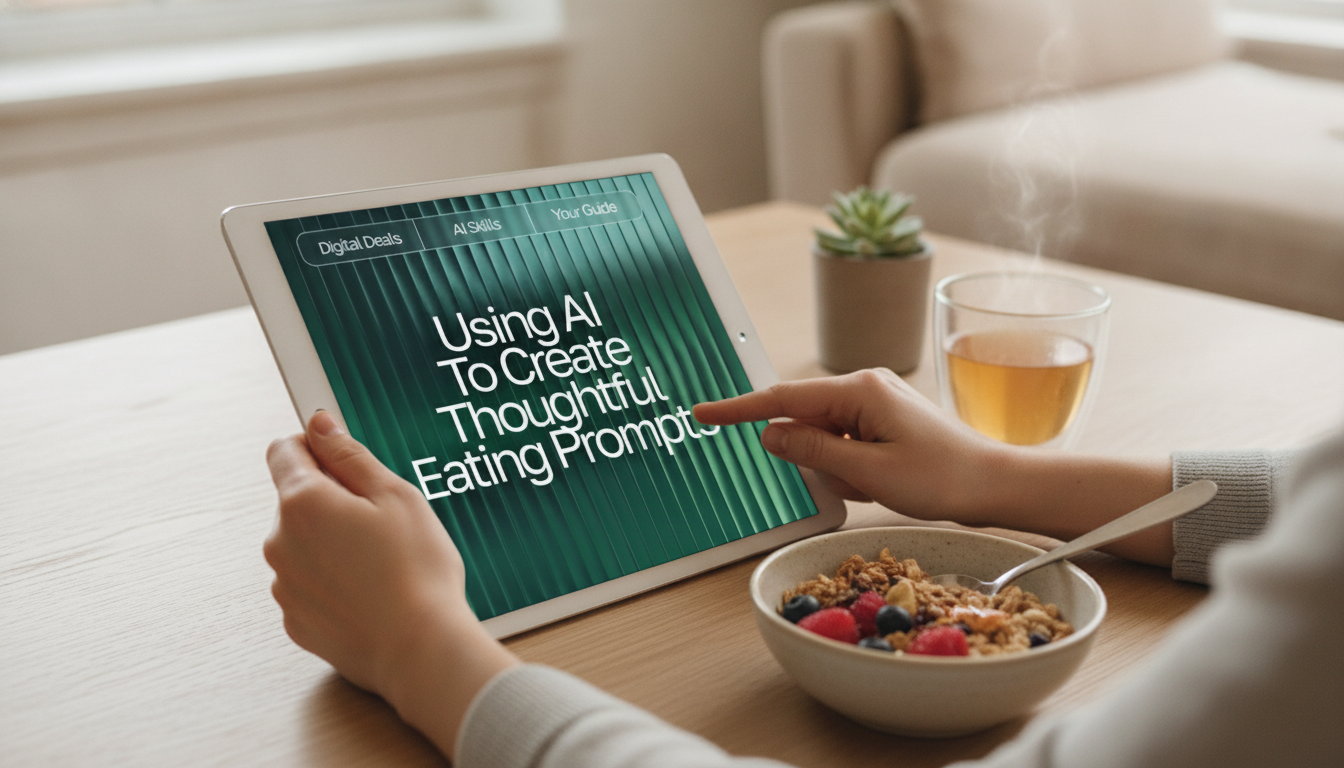
Using AI to Create Thoughtful Eating Prompts | Mindful Eating Prompts with AI | Digital Guide for Mindful Living & Healthy Habits is designed for quick check-ins so meals stay enjoyable—more “small course correction” and less “long exercise.”
Pairing mindful eating with other small daily systems
- Energy + productivity tracking: Noticing sleep debt, long meetings, or missed breaks helps explain sudden cravings and rushed eating. A simple tool like Your AI-Powered Daily Boost Checklist | Digital Energy Tracker and Daily Routine Optimizer can make patterns easier to spot.
- A daily checklist for meal timing: Planning an earlier snack or a real lunch reduces late-day “anything will do” decisions.
- Family schedule alignment: Household routines influence adult eating more than most people expect. If family timing is the main constraint, Using AI to Organize Your Child’s Day with Ease – Practical Parenting Guide can help stabilize the day’s flow so meals aren’t constantly improvised.
FAQ
How often should meal check-ins be used?
Start with one meal per day for a week, keeping each check-in to 10–30 seconds. Expand only if it feels supportive rather than stressful.
Can AI tools support mindful eating without calorie counting?
Yes—focus on hunger/fullness, satisfaction, pace, environment, and routine patterns. Set clear boundaries so the guidance avoids numbers and avoids labeling foods as “good” or “bad.”
What if these check-ins increase anxiety around food?
Scale back to one gentle question (like hunger and satisfaction) and drop any rigid rules. If anxiety persists or connects to disordered eating patterns, professional support is the safest next step.











Leave a comment